Best Red Light Therapy Panels 2026: 5 Devices Compared & Ranked
We compared the best red light therapy panels on the market. Here are our top picks for every budget, from $350 to $1,699.
Best overall: Mito Red MitoPRO+ 1500+. Four targeted wavelengths, honest published output data, and a full-body panel at $1,169 with smaller sizes from $369.
Top 3 picks for 2026:
- Mito Red MitoPRO+ 1500+ (Mito Red Light, $369 to $1,169): best overall, quad-wavelength panels with third-party tested EMF and published spectroradiometer data
- BON CHARGE Max (BON CHARGE, $999): best tested, independent lab-verified irradiance and very low EMF at 0.05-0.1 uT
- PlatinumLED BioMax RLT (PlatinumLED, $1,049): best value, 7 wavelengths including 480nm blue and 1060nm IR, FDA Class II registered
Red light therapy has gone from a niche biohacking tool to a mainstream wellness essential. With dozens of panels ranging from $100 to $8,000+, choosing the right one is overwhelming. The Nordic Recovery Guide team compared specifications, wavelengths, irradiance data, and build quality across the most popular panels to land on these picks.
New to red light therapy? Start with our beginner’s guide to red light therapy for an overview of how it works and what to expect.
Our Top Picks at a Glance
The Science Behind Red Light Therapy
Red light therapy works through a process called photobiomodulation. When red and near-infrared light reaches your cells, it’s absorbed by an enzyme in the mitochondria called cytochrome c oxidase. This boosts ATP (cellular energy) production and triggers a cascade of beneficial effects:
- Reduced inflammation through modulation of NF-kB pathway
- Increased collagen production for skin health
- Enhanced blood flow and microcirculation
- Accelerated tissue repair and wound healing
- Improved mitochondrial function, the fundamental driver of all benefits
Thousands of peer-reviewed studies have been published on photobiomodulation, with strong evidence for skin health, pain relief, wound healing, and inflammation reduction.
What to Look For
Wavelengths
The two most researched wavelengths are 660nm (red, visible) and 850nm (near-infrared, invisible). Most quality panels offer both. Some newer panels add 630nm, 810nm, and 1060nm, though clinical evidence for these is still developing. Start with a dual-wavelength panel (660nm + 850nm). Multi-wavelength is a bonus, not a necessity.
Irradiance
Power output measured in mW/cm² at a specific distance. Higher irradiance means shorter sessions. Look for at least 100 mW/cm² at 6 inches on a consumer-meter reading. Be cautious of manufacturers who only report irradiance at the LED surface, and note that professional spectroradiometer readings come in far lower than consumer light-meter numbers, so only compare figures measured the same way.
Treatment Area
A small panel works for face or joints. For full-body therapy, you need a panel at least 36 inches tall, or a modular stackable system.
EMF Levels
Quality panels should have near-zero electromagnetic field emissions at treatment distance. Look for third-party EMF testing results. If a manufacturer doesn’t publish these, consider it a red flag.
Build Quality & Warranty
A good panel should last 50,000+ hours. Look for metal housing, active cooling fans, and at least a 2-year warranty (ideally 3+).
Detailed Reviews
Premium Tier
1. Mito Red MitoPRO+ 1500+ - Best Overall
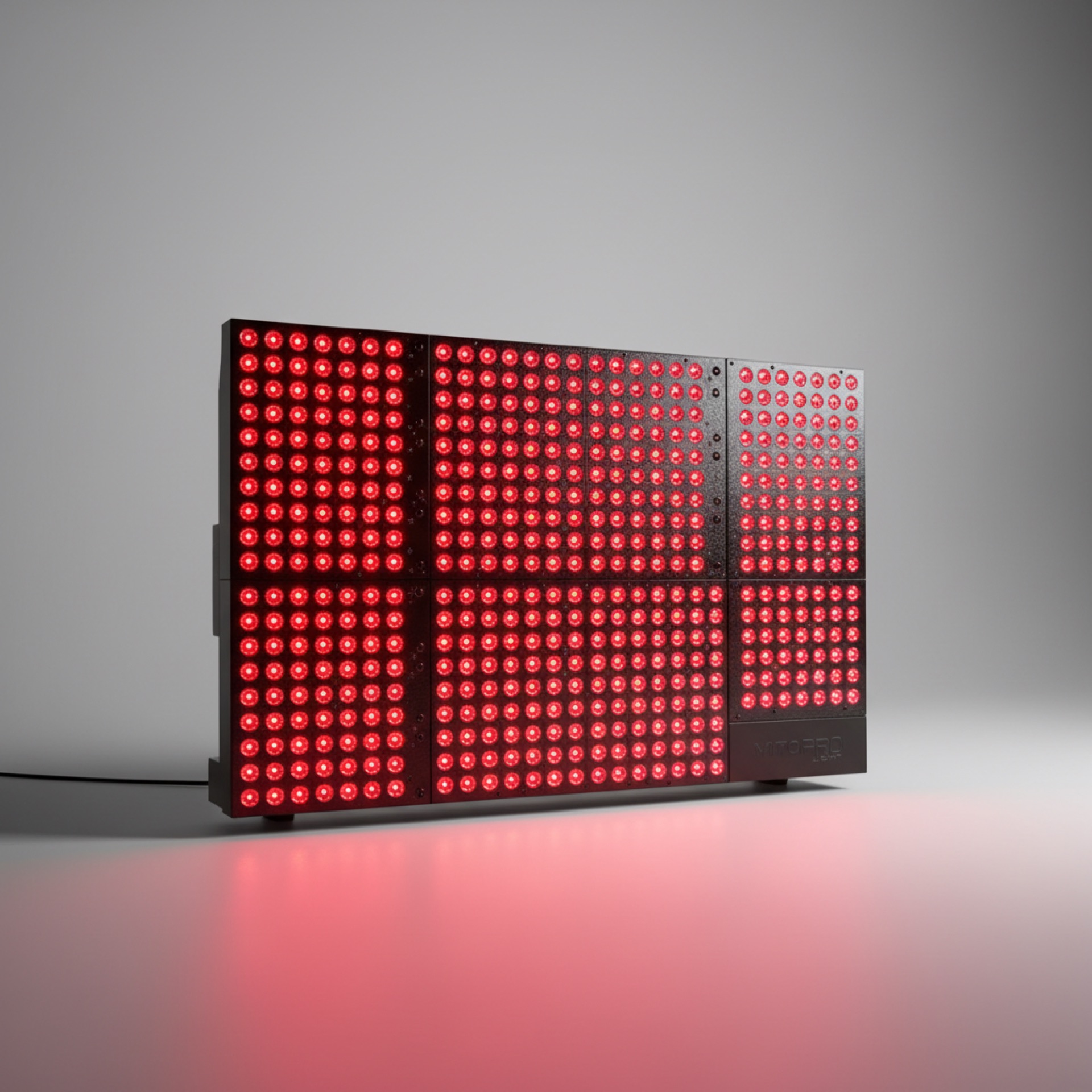
Mito Red MitoPRO+ 1500+
$1,169
Pros
- 4 targeted wavelengths (630, 660, 830, 850nm)
- Publishes both consumer-meter and spectroradiometer irradiance figures
- Three sizes ($369, $869, $1,169) to match space and budget
- Low EMF, third-party tested, flicker free
- FDA Class II registered, ETL certified
- Remote control can operate multiple units
- 3-year warranty + 60-day money-back guarantee
Cons
- No touchscreen or app control (reserved for the pricier MitoPRO X line)
- No pulsing mode
- Spectroradiometer reading (>68 mW/cm²) is far below the consumer-meter marketing figure
The MitoPRO+ series concentrates its output on the four most studied wavelengths: 630nm and 660nm in the red range, 830nm and 850nm in the near-infrared, split evenly at roughly 25% each. This is a deliberate design choice targeting cytochrome c oxidase absorption peaks rather than chasing a longer wavelength list. The trade-off versus Mito Red’s own MitoPRO X line: you give up the 590nm amber and 810nm diodes, the touchscreen, and app integration, and pay a few hundred dollars less for it.
The irradiance reporting is what sets Mito Red apart. Most brands publish a single inflated consumer-meter number. Mito Red lists both: over 170 mW/cm² at 6 inches on a consumer-grade meter, and over 68 mW/cm² at the same distance measured with a professional spectroradiometer. That second figure is the honest one, and very few competitors publish anything like it. EMF is third-party tested as low, and the panels are flicker free.
Controls are simple: a digital panel with timer, three modes (red only, NIR only, or both), and a remote that can operate several units at once if you build out a multi-panel setup. The full-body 1500+ measures 12 by 36 inches, weighs 22 lbs, and draws 375W, so standard mounting hardware handles it fine.
Available sizes:
- MitoPRO 300+ (tabletop panel, 60 LEDs, 10” x 12”) - $369
- MitoPRO 1000+ (mid-size panel, 200 LEDs, 12” x 24”) - $869
- MitoPRO 1500+ (full-body panel, 300 LEDs, 12” x 36”) - $1,169
2. Joovv Solo 3.0 - Best Premium
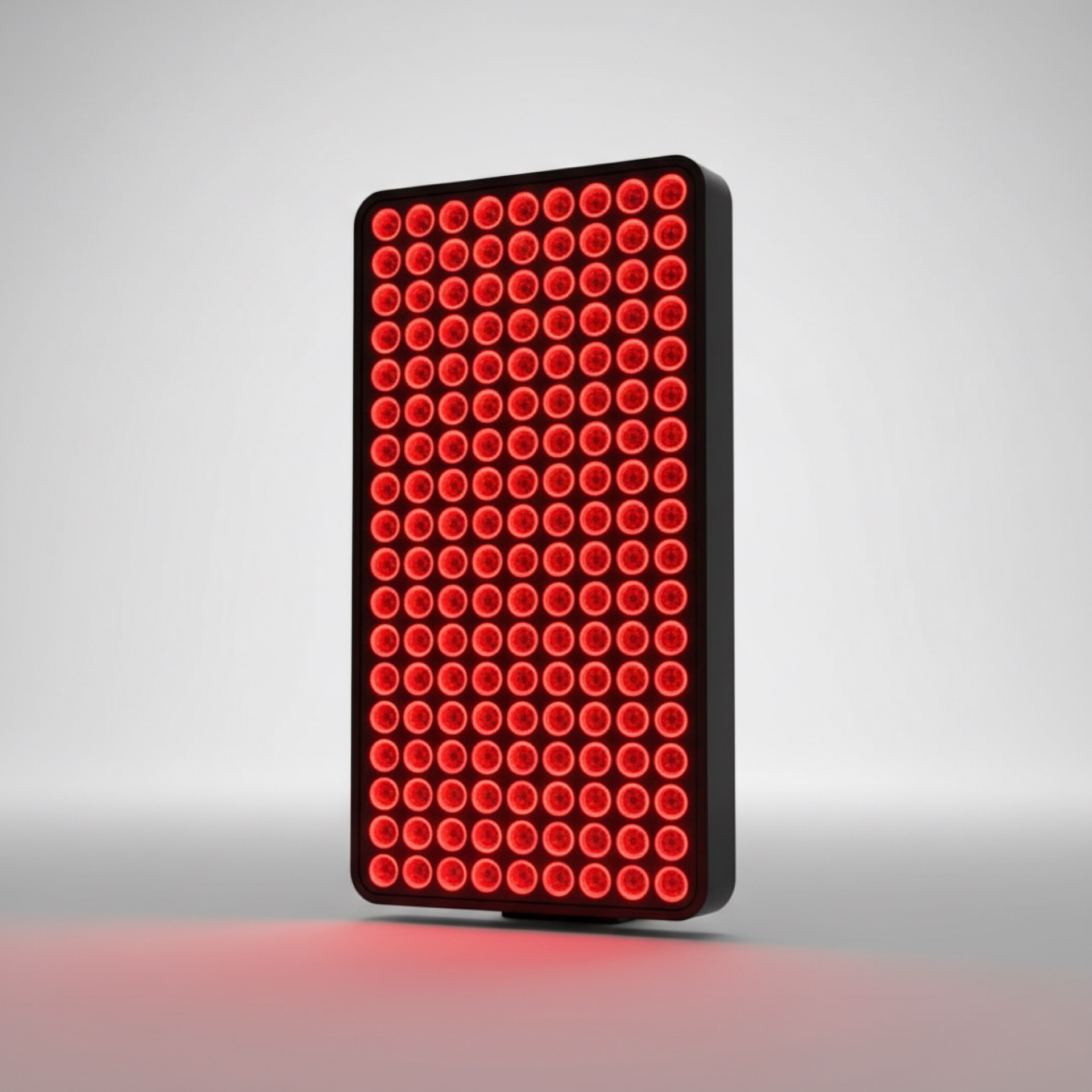
Joovv Solo 3.0
$1,699
Pros
- Sleek, Apple-like industrial design
- Bluetooth app with session tracking
- Ambient mode for low-intensity use
- Recovery+ mode with pulsing
- Established brand with large community
Cons
- Most expensive per LED in this comparison
- Only 2 wavelengths (660nm + 850nm)
- Costs nearly double the MitoPRO 1000+
- Proprietary mounting system
Joovv did more than any other brand to bring red light therapy into the mainstream, and the Solo 3.0 reflects that pedigree. The industrial design is clean and minimal, closer to a consumer electronics product than a medical device. If you already own other Joovv panels, the modular mounting system connects them together for larger coverage areas.
The Bluetooth app tracks session history and lets you toggle between modes, including Recovery+ (pulsed light delivery, which some research links to improved cellular response) and Ambient (a low-intensity mode that works as a wellness lamp). These are features no other panel in this comparison offers.
The problem is value. At $1,699, the Solo 3.0 costs nearly double the MitoPRO 1000+ ($869), while offering two wavelengths to Mito’s four. Joovv claims over 100 mW/cm² at treatment distance, though independent testing by Light Therapy Insiders measured a peak of around 74 mW/cm² and an average of 59 mW/cm² across nine points. You’re paying for the app ecosystem, the design, and the brand. Whether that trade-off makes sense depends on how much you value those things over raw specs.
Mid-Range
3. BON CHARGE Max - Best Third-Party Tested
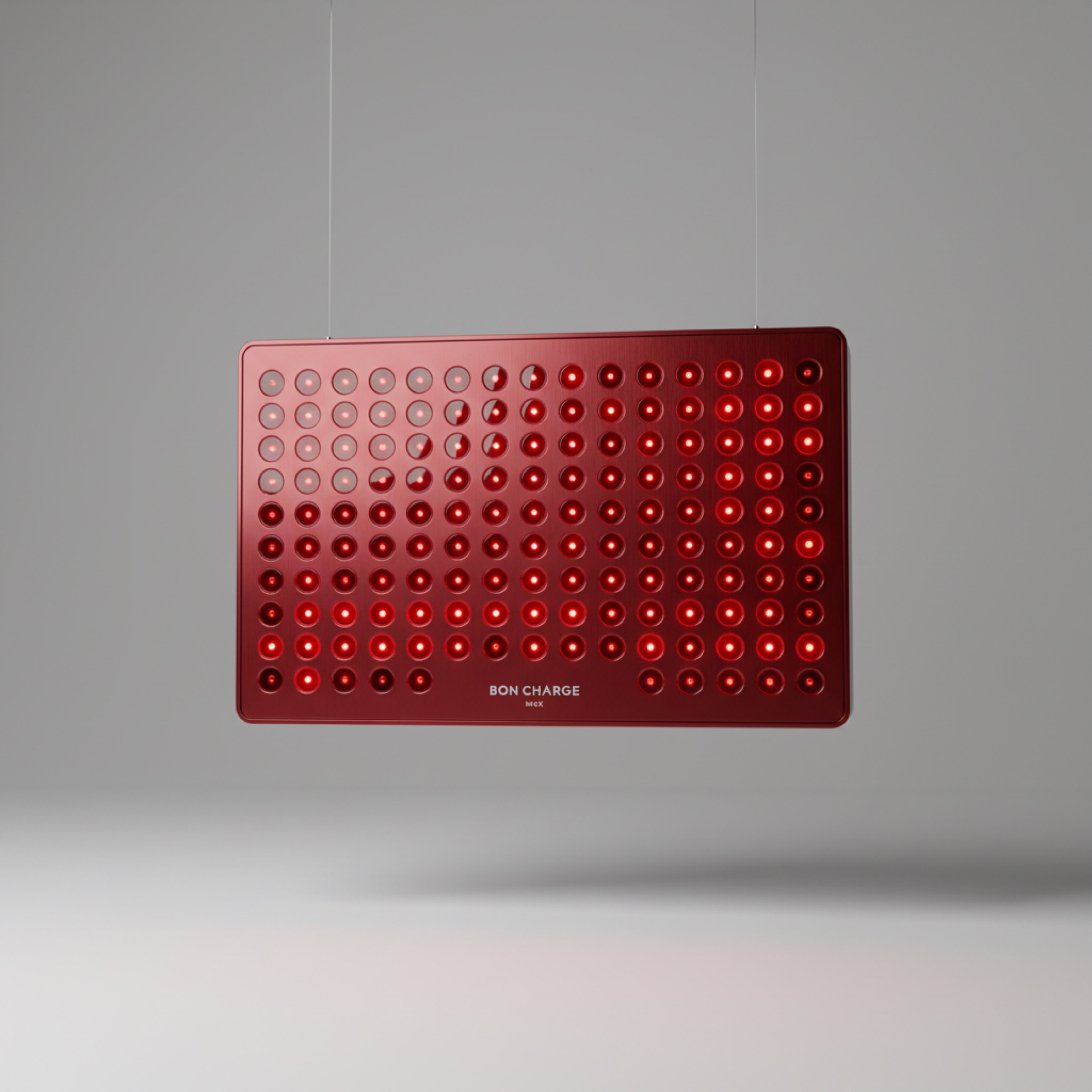
BON CHARGE Max Red Light Therapy Device
$999
Pros
- Published irradiance (>142 mW/cm²) and full spec sheet
- Very low EMF (0.05-0.1 uT)
- Dual wavelength (660nm + 850nm)
- 400 LEDs total (200 red + 200 NIR), 1,000W power
- CE, FCC, FDA, ARTG certified
Cons
- Only two wavelengths (no multi-spectrum option)
- No app control or pulsing modes
- 1-year warranty (shorter than PlatinumLED's 3 years)
If you’ve spent any time researching red light panels, you’ve probably noticed that most brands publish irradiance numbers without explaining how they were measured. BON CHARGE takes a different approach. The Max device publishes a >142 mW/cm² irradiance figure alongside a full spec sheet, and the company holds CE, FCC, FDA, and ARTG certifications. You can compare their claimed specs against the manufacturer’s documentation rather than marketing copy alone.
Their EMF disclosure is equally transparent at 0.05-0.1 uT, which is very low and among the best results in this comparison. The device sticks to dual wavelength (660nm + 850nm) across 400 LEDs, so you don’t get the multi-wavelength coverage of the MitoPRO+ or BioMax RLT. For buyers who prioritize verified performance and low EMF over wavelength variety, that trade-off is an easy one to make.
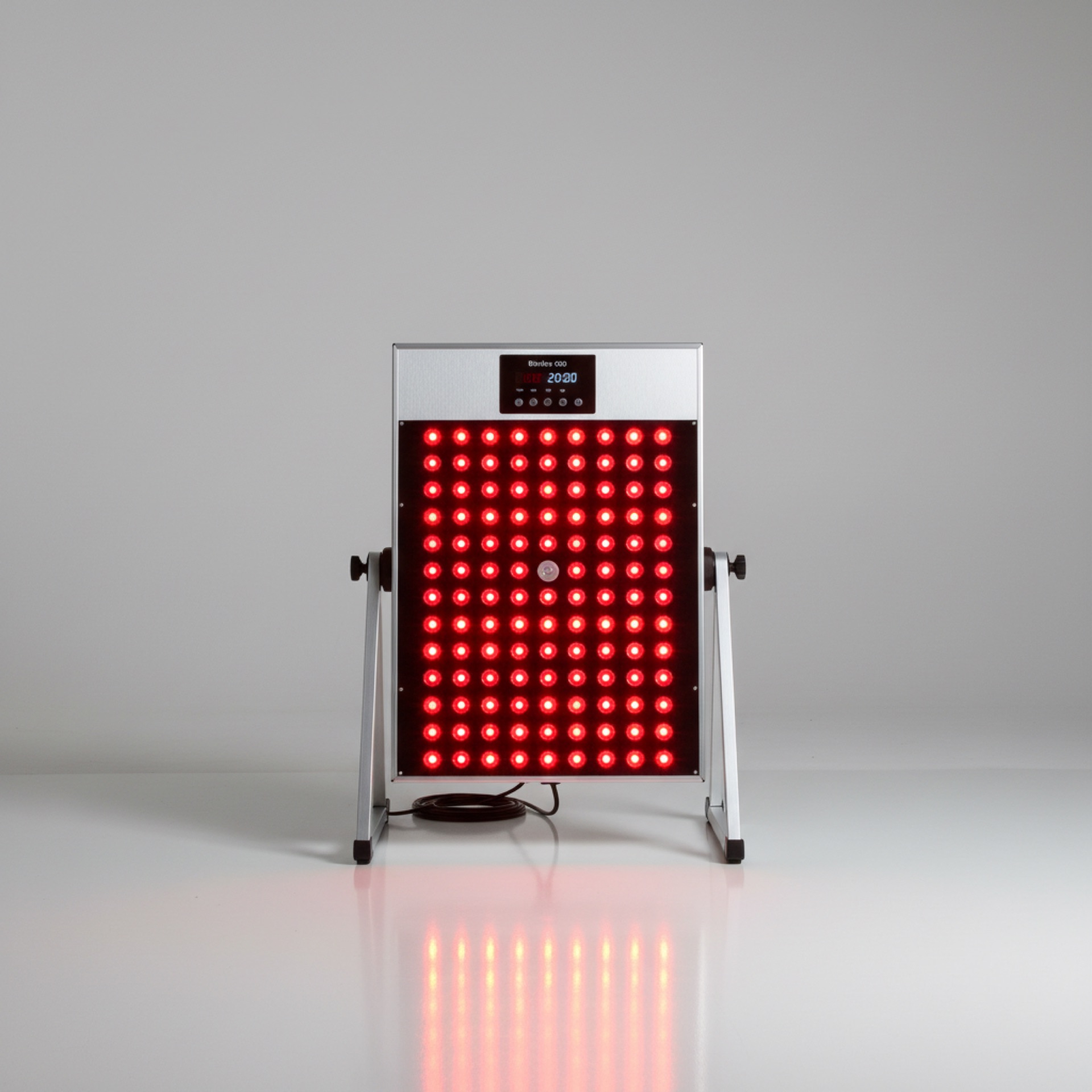
4. PlatinumLED BioMax RLT - Best Value
PlatinumLED BioMax RLT
From $659
Pros
- 7 wavelengths including 480nm blue and 1060nm IR
- Available in 4 sizes (300, 450, 600, 900) to match space and budget
- R+ and NIR+ modes for targeted therapy
- Modular and stackable
- FDA Class II registered
- 3-year warranty
- Zero EMF (0.0 uT at 4")
Cons
- Fan noise is noticeable
- Build quality slightly below Mito Red
- Configurator can feel overwhelming with size choices
The BioMax RLT line is PlatinumLED’s current full-spectrum platform. You pick a size (300, 450, 600, or 900) to match your space and budget; pricing runs from $659 for the BioMax 300 to $1,299 for the 900, with the 600 at $1,049. All sizes share the same seven-wavelength engine, which adds 480nm (blue) and 1060nm (infrared) to the original five, giving you the widest wavelength range in this comparison.
PlatinumLED includes R+ and NIR+ modes that let you isolate specific wavelength ranges. Running red-only mode concentrates output on the shorter wavelengths for skin health, while NIR-only mode pushes near-infrared for deeper tissue penetration. Irradiance and treatment area scale with panel size. EMF measures 0.0 uT at 4 inches, which is effectively zero. Build quality is decent without being premium. The housing feels slightly thinner than the Mito Red equivalent, and the fans are noticeable. The BioMax line is modular and stackable, so two smaller panels can substitute for one larger one as your needs grow. Warranty is 3 years across the line.
Budget Pick
5. NovaaLab Pad - Best Budget
NovaaLab Red Light Therapy Pad
~$350
Pros
- Dramatically lower price than panel competitors
- Flexible pad wraps around body parts
- Portable, great for travel
- Dual wavelength (660nm + 850nm)
- Good for targeted therapy (knees, shoulders, neck)
Cons
- Lower irradiance than rigid panels
- Not suitable for full-body therapy
- Less durable than metal-housing panels
- Smaller treatment area per session
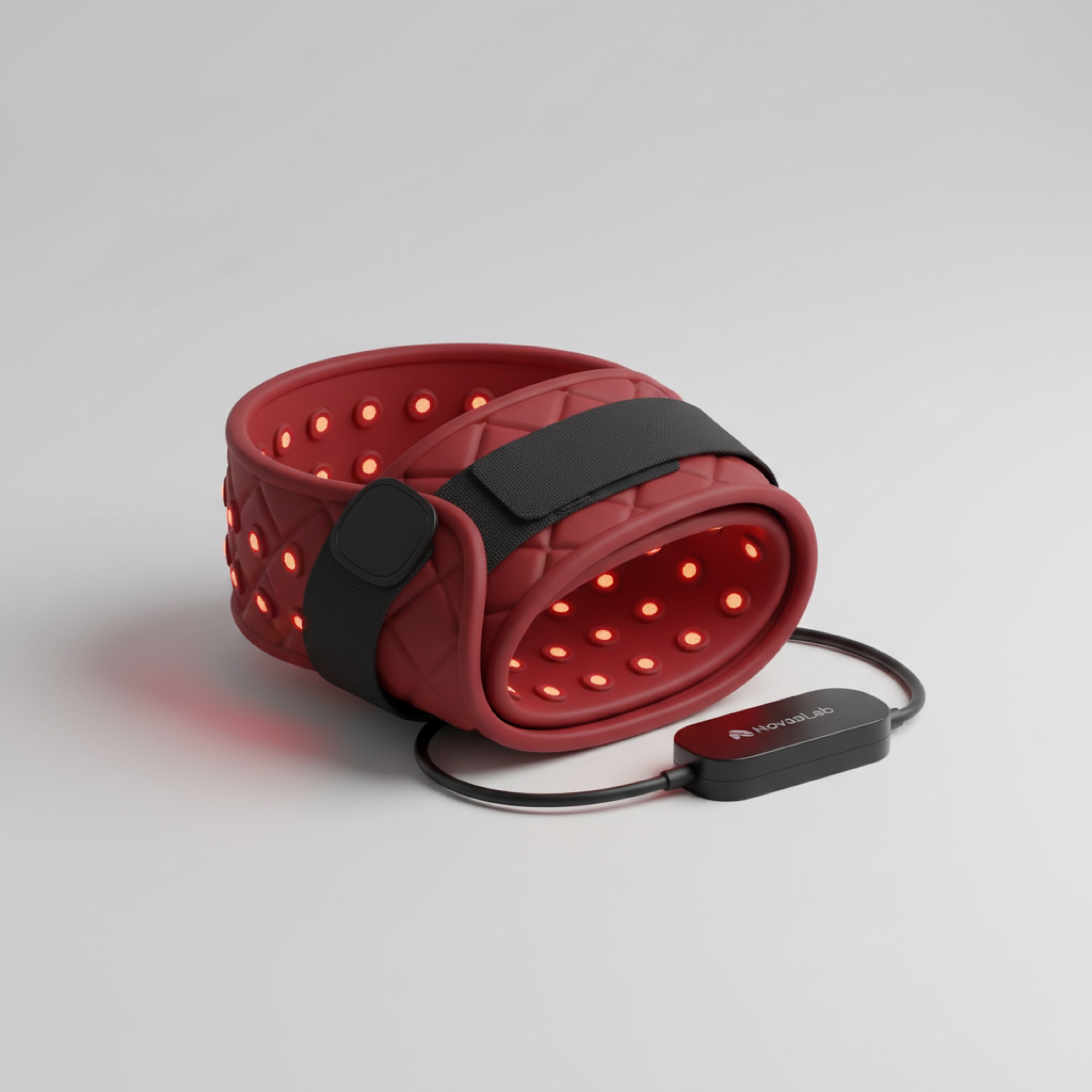
At around $350, the NovaaLab Deep Healing Pad costs less than a single session package at most red light therapy clinics. It’s not a panel in the traditional sense. It’s a flexible LED pad that wraps around your knee, shoulder, neck, or any other area you want to target. You can also lay it flat for face treatments. It’s the only device in this comparison that fits in a bag, making it practical for travel.
The pad delivers dual wavelength output (660nm + 850nm) with 450 LED chips. Because it’s designed for direct contact use, irradiance is highest at the surface (around 150 mW/cm²) and drops off quickly with distance. You can only treat one area per session, and durability won’t match a metal-housing panel over the long term. These are reasonable trade-offs for a product aimed at people who want to try red light therapy without spending $1,000+. If you find yourself using it consistently and wanting broader coverage, you can always add a full-size panel later.
Head-to-Head Comparison
| Feature | MitoPRO+ 1500+ | BON CHARGE | BioMax RLT | Joovv Solo 3.0 | NovaaLab Pad |
|---|---|---|---|---|---|
| Wavelengths | 4 (630-850nm) | 2 (660+850nm) | 7 (480-1060nm) | 2 (660+850nm) | 2 (660+850nm) |
| Irradiance at 6" | >68 mW/cm² (spectroradiometer) | >142 mW/cm² | Not published (lab reports instead) | >100 mW/cm² | ~150 mW/cm² (contact use) |
| Treatment area | Full body | Torso | Full body (stackable) | Torso (stackable) | Targeted only |
| EMF at 6" | Low (third-party tested) | Very low (0.05-0.1 uT) | Zero (0.0 uT at 4") | 23 V/m electric field | Zero (per manufacturer) |
| Third-party tested | |||||
| Warranty | 3 years | 1 year | 3 years | 2 years | 1 year |
| Pulsing mode | |||||
| App control | |||||
| Price | $1,169 | $999 | $1,049 | $1,699 | ~$350 |
How to Get Started
Stand 6-12 inches from the panel with bare skin. Start with 10-minute sessions daily, working up to 15-20 minutes per area. Remove sunscreen, lotions, and makeup before use, as they can block or scatter light.
Most people notice improved sleep and energy within 1-2 weeks. Skin and pain benefits typically appear at 4-8 weeks with consistent use. Morning sessions support alertness and circadian rhythm, while evening red-only sessions (no NIR) can support sleep.
Wear the included eye protection and avoid staring directly into the LEDs during extended sessions.
Frequently Asked Questions
Is red light therapy safe?
Yes. Red light therapy is non-invasive and has an excellent safety profile. It’s FDA-cleared for several conditions. The most common “side effect” is mild warmth at the treatment site.
How long before I see results?
Most people notice improved sleep and energy within 1-2 weeks. Skin and pain benefits typically appear at 4-8 weeks with consistent daily use.
Can I use red light therapy every day?
Yes. Daily use is safe and generally recommended. Most clinical studies that showed positive results used daily or near-daily protocols.
Do I need eye protection?
Most manufacturers include protective goggles. While brief, indirect exposure is generally safe, avoid staring directly into the LEDs during extended sessions.
Is it worth paying $1,000+ for a panel?
If you plan to use it regularly, yes. A quality panel lasts 50,000+ hours. That’s over 13 years of daily 20-minute sessions. At $1,000, that’s less than $0.25 per session.
Our Verdict
For most people, the Mito Red MitoPRO+ series is the best choice in 2026. It concentrates output on the four most studied wavelengths, publishes honest spectroradiometer data, and undercuts the competition on price. Start with the 300+ ($369) if you want to try it out, or go for the full-body 1500+ ($1,169).
Want the widest spectrum? The PlatinumLED BioMax RLT line starts at $659 and gives you seven wavelengths with zero EMF, with size options to match any space. And if you just want to dip your toes in, the NovaaLab Pad at ~$350 is a low-risk starting point.
Red light therapy pairs well with heat and cold exposure for a comprehensive recovery routine. See how all three modalities work together in our contrast therapy protocol. And if you’re exploring full-spectrum recovery, infrared saunas offer complementary benefits in the near-infrared range.
Related Articles
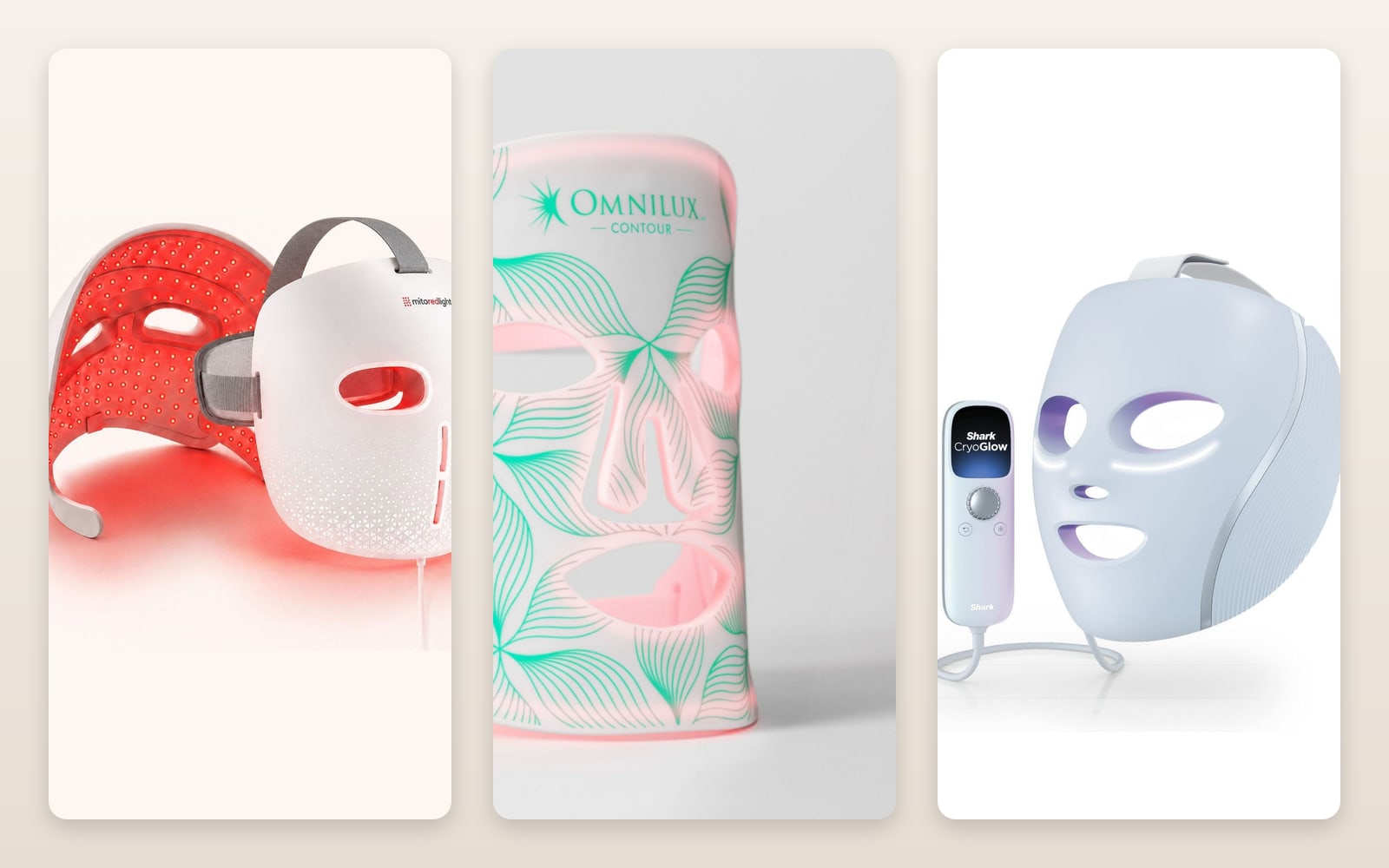
Best LED Face Masks 2026: 5 Red Light Masks Compared
We compared the best LED face masks of 2026 on LED count, wavelengths, FDA clearance, and price. Here are five red light masks actually worth considering.
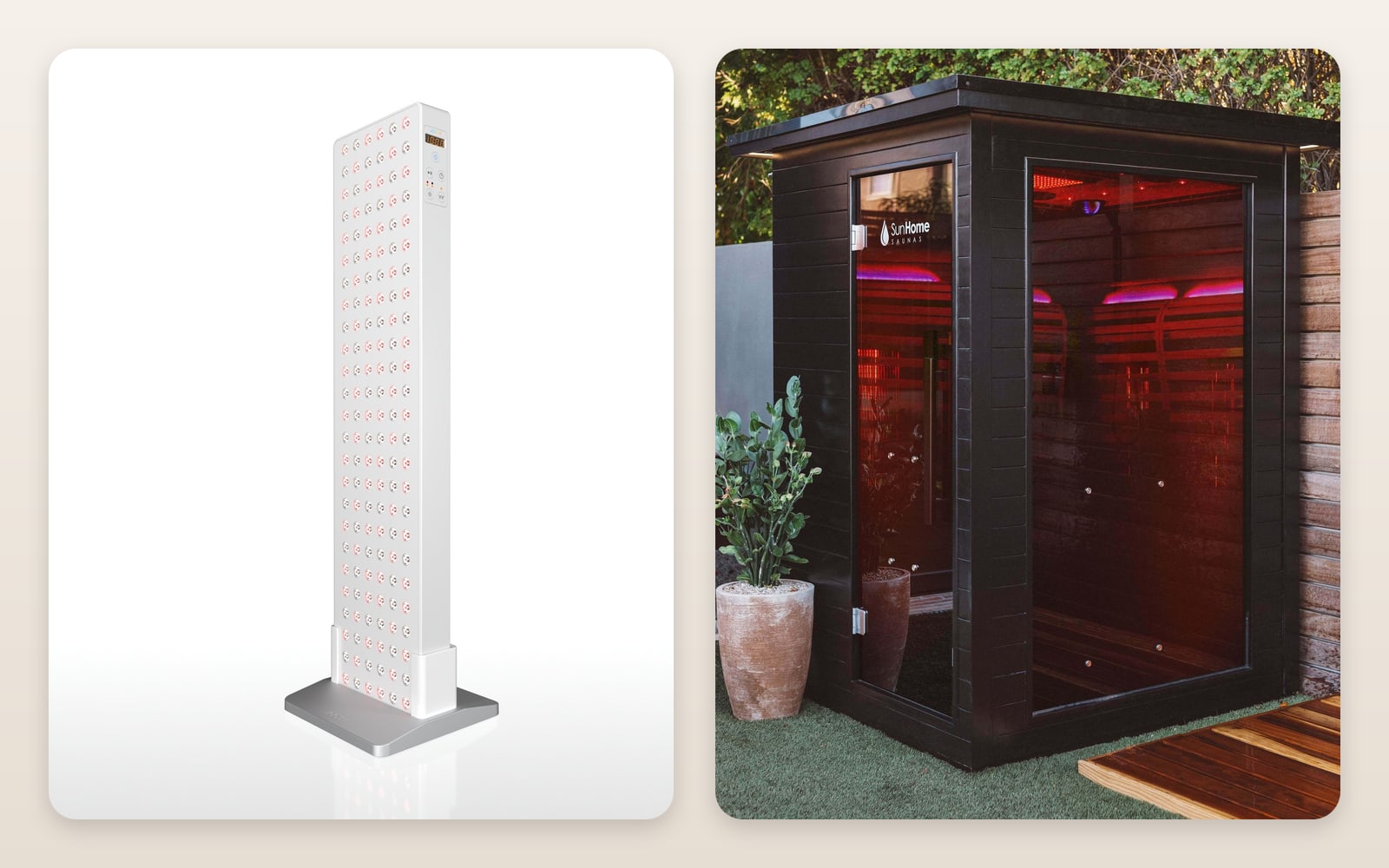
Red Light Therapy vs Infrared Sauna: Which One Should You Buy First?
A practical comparison of red light therapy panels and infrared saunas. We use the Joovv Solo 3.0 and Sun Home Luminar 2 as reference points and break down mechanism, benefits, cost, and who each tool fits best.
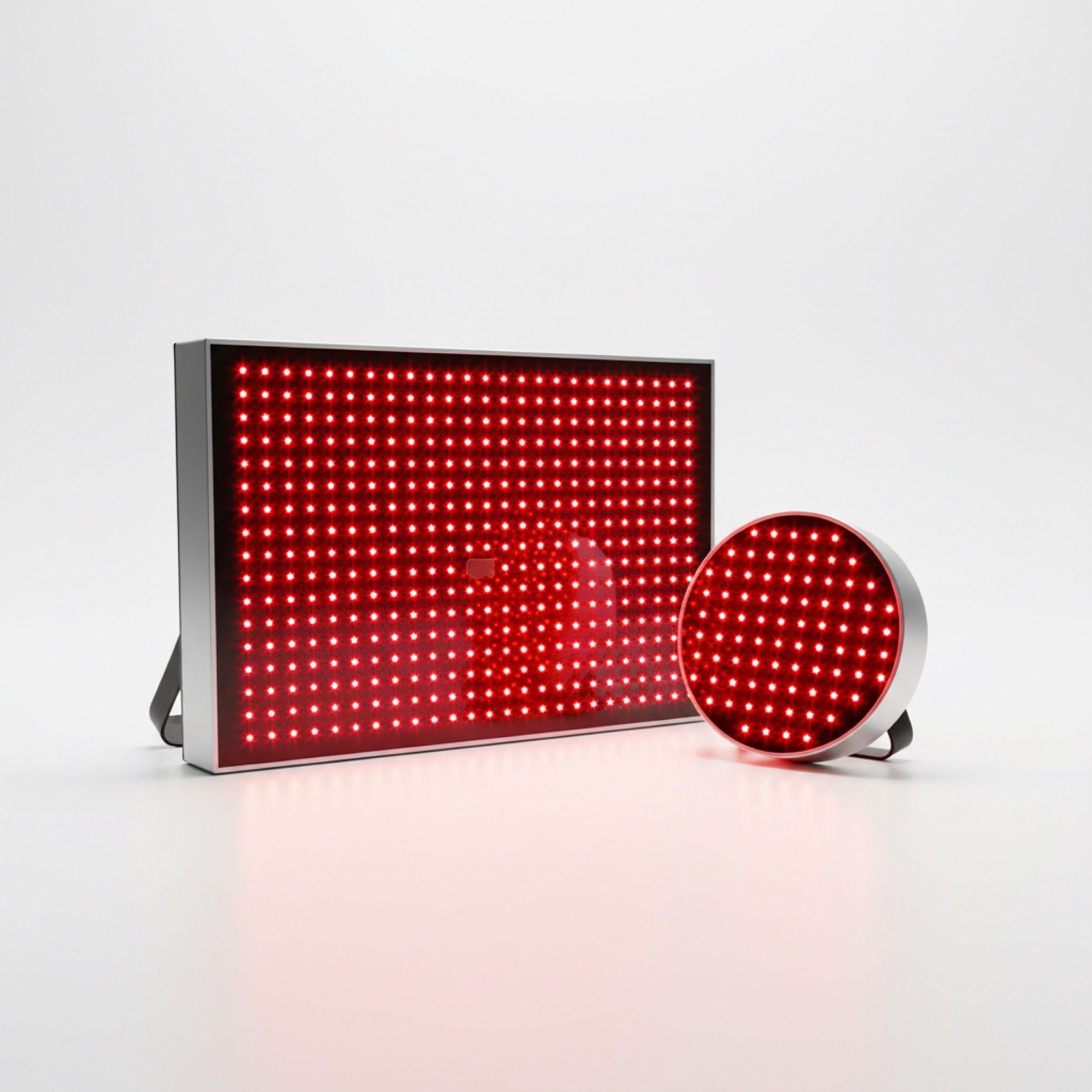
Joovv vs Mito Red Light: Which Panel Is Actually Worth It?
A detailed spec-by-spec comparison of Joovv Solo 3.0 and Mito Red MitoPRO+. We break down wavelengths, irradiance, EMF, price, and who each panel is best for.